
Prerequisite
This section covers all requirements to run the essentry cloud connector.Supported Configurations
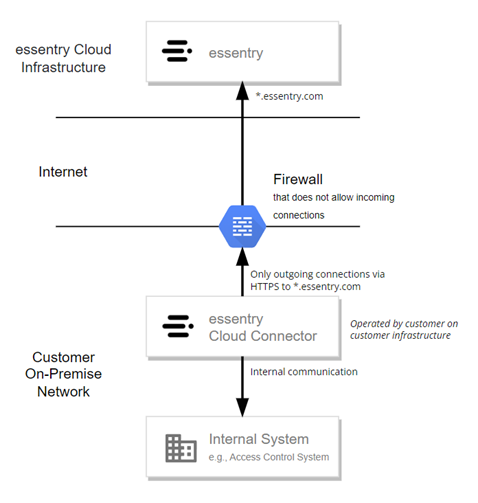
To enable essentry to integrate with a locally or remotely installed system (for example an on-premise access control system), one of the following configurations are required. The essentry cloud connector is:- installed on the same system as the integrated system.
- installed on a satellite system, able to communicate with the integrated system.
Local System Hardware Requirements
Local System Software/Firewall Requirements (essentry cloud connector)
- Supported Operating Systems: https://github.com/dotnet/core/blob/main/release-notes/10.0/supported-os.md
- Windows 10 / 11 / Server 2012 / other
- Open Ports: 443 (HTTPS) to
*.essentry.com
The installer bundles and installs all required dependencies, including the
.NET Runtime and ASP.NET Core Runtime. You no longer need to install these
manually.
Overview
Setting up the essentry cloud connector consists of three steps:- Create the integration in the essentry dashboard and download your
appsettings.json. - Install the cloud connector on your Windows system using the installer.
- Configure the connected system in the configuration UI.
1. Create the Integration
First, create a cloud connector integration in the essentry dashboard. This generates the credentials and theappsettings.json file that the installer needs.
1
Open the Integrations area
Sign in to the essentry dashboard and open the Integrations page (Company Settings → Integrations).Under API Integrations, select Essentry Cloud Connector.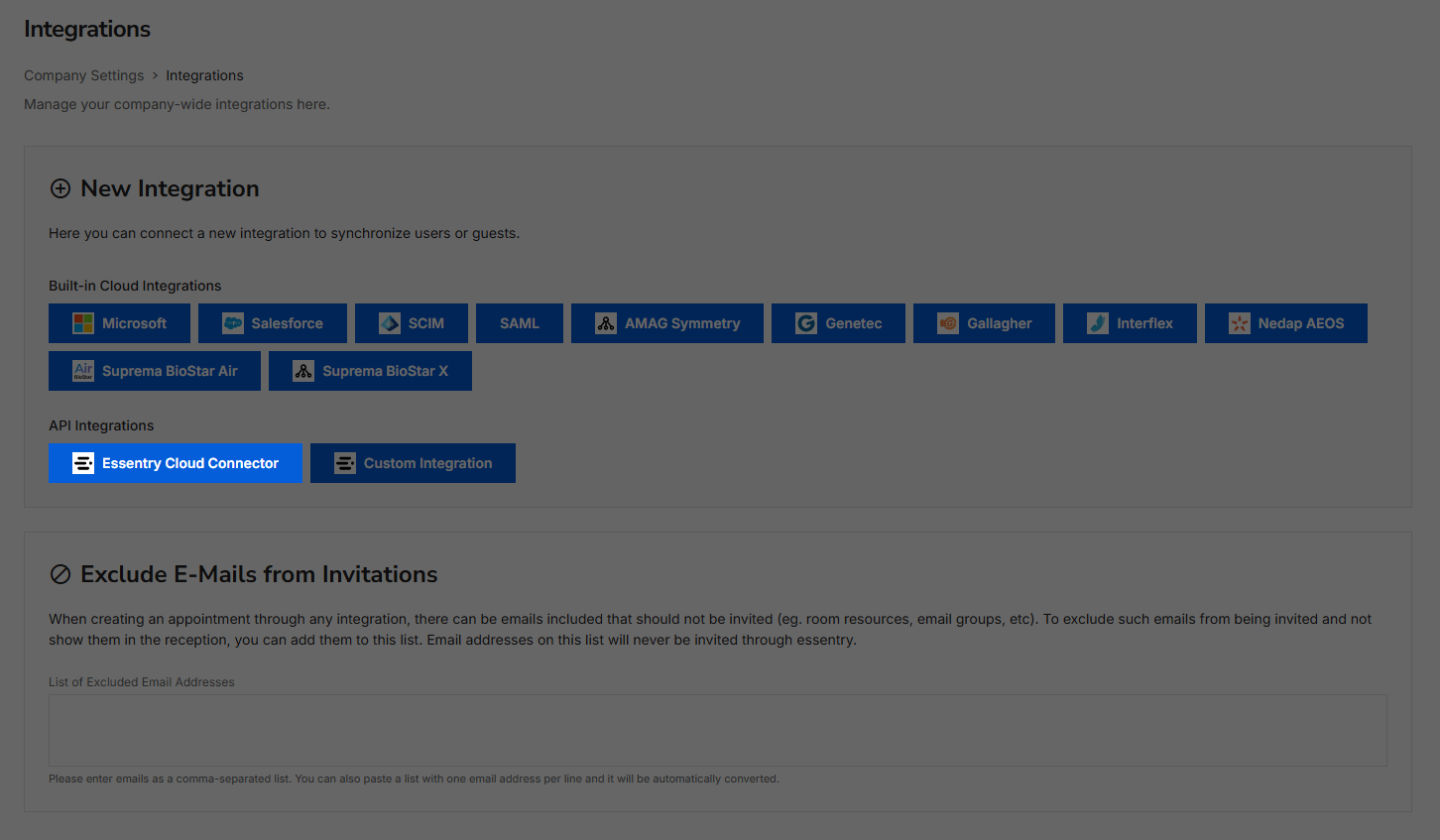
2
Configure name and permissions
Configure the new integration: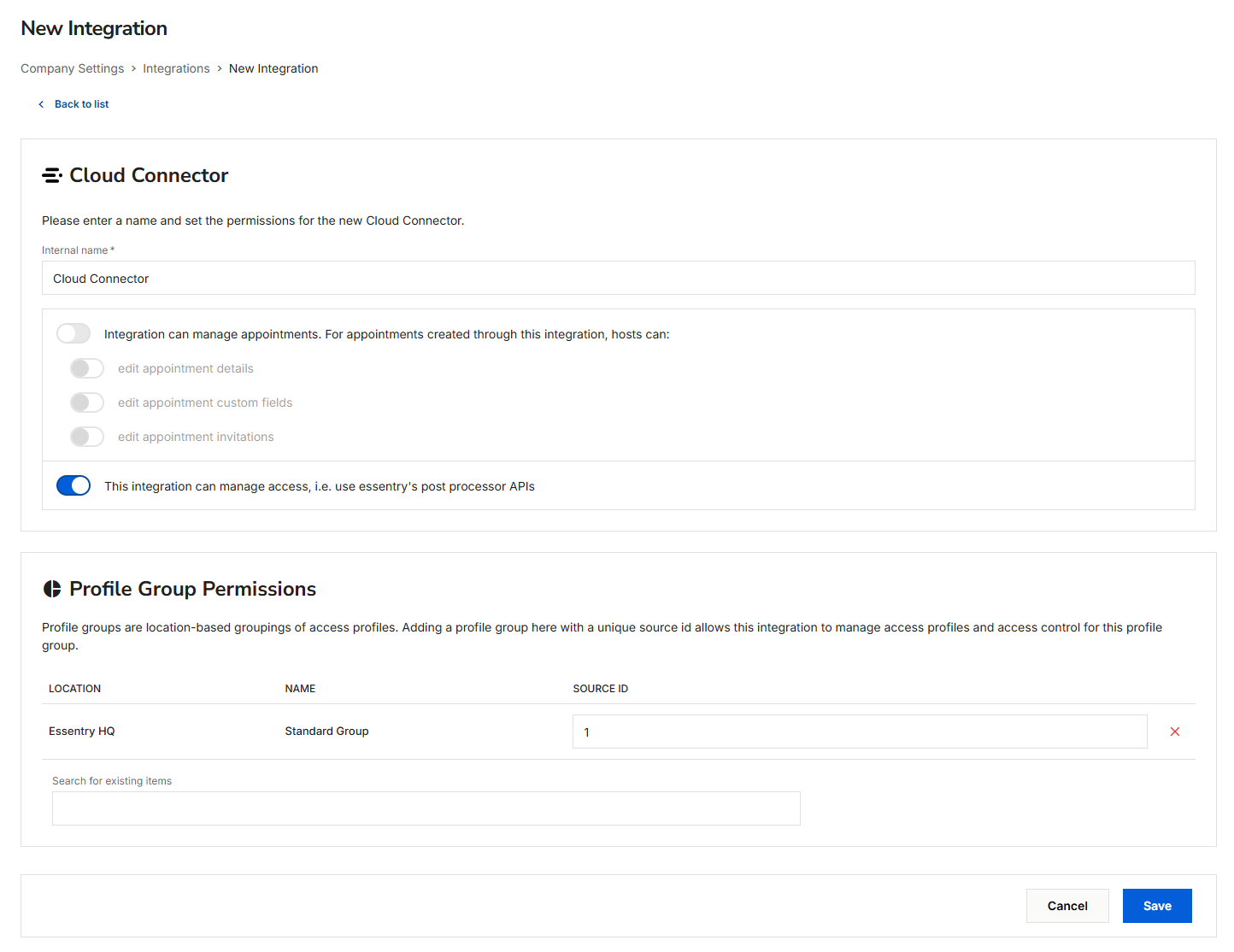
- Enter an Internal name for the integration.
- Enable This integration can manage access, i.e. use essentry’s post processor APIs.
- Under Profile Group Permissions, add a profile group and assign it a Source ID. This source id links the profile group to the connected system and is referenced later in the configuration UI.
3
Set credentials and download appsettings.json
After saving, enter a Username and Password for the cloud connector configuration UI. You will use these credentials to log in later, so keep them safe.Then download your 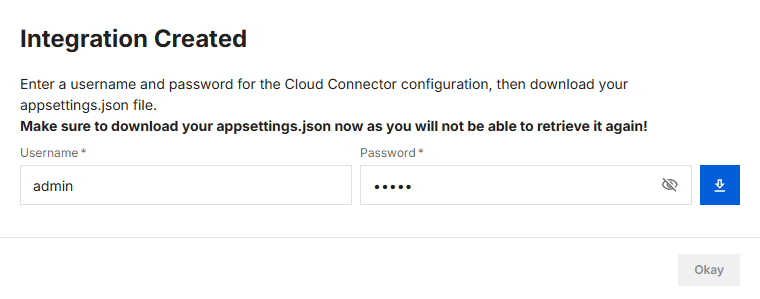
appsettings.json file.2. Install the Cloud Connector
You receive the essentry cloud connector from us as a ZIP file containing the installer (.exe). The installer registers the cloud connector as a Windows service and installs all required dependencies automatically.
1
Run the installer
Extract the ZIP file and run the installer (
.exe). When prompted, provide the appsettings.json file you downloaded in step 1.2
Configure the service options
On the Service Options screen, enable both options: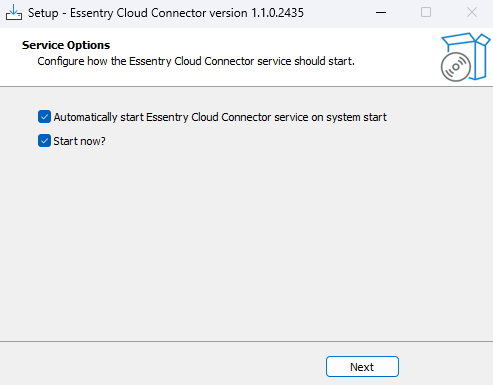 Continue and finish the installation. The cloud connector is now registered as a Windows service that starts automatically and recovers from failures. The service name starts with
- Automatically start Essentry Cloud Connector service on system start
- Start now?
essentry_agent_.3. Configure the Connected System
Once the service is running, open the configuration UI to connect your on-premise system.1
Open the configuration UI
Open http://localhost:10900 in a browser on the system where the cloud connector is installed, and log in with the Username and Password you set in step 1.
2
Configure the connected system
Add and configure your connected system (for example C-CURE). Enter the connection details for your access control system and set the Profile Group Source ID to the source id you assigned in the essentry dashboard.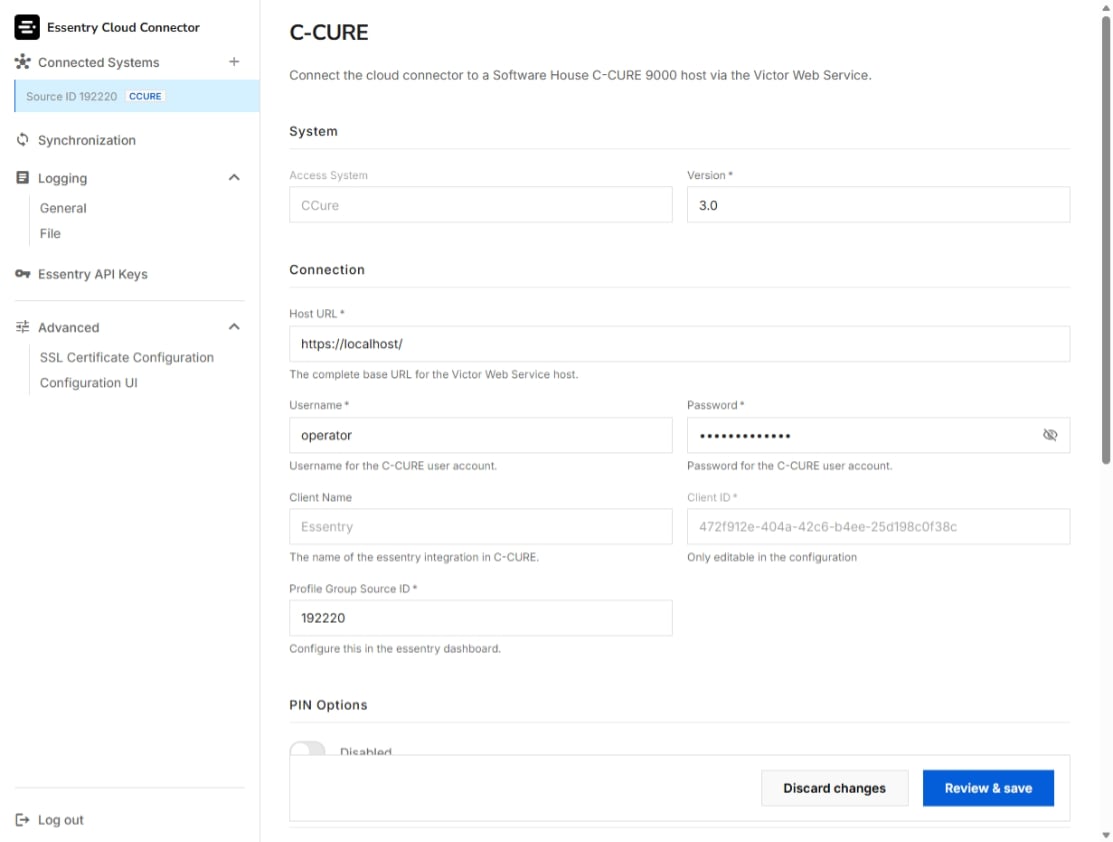 For system-specific settings, see the Configuration guides.
Upgrading
To upgrade the essentry cloud connector, run the installer from the new version’s ZIP file. It updates the existing installation in place. Your existing configuration andappsettings.json are preserved.